Speakers
Controlling AI Workloads | |
| This talk introduces a control-theoretic approach to managing AI inference in dynamic environments from the cloud to the edge and back. By embedding adaptive controllers into neural network pipelines and structuring models for real time flexibility, we enable inference systems that intelligently reconfigure themselves on the fly, responding to shifting workloads, resource limits, performance constraints, and even security. We discuss methods for building and training controllable AI, techniques for controlling it within larger applications, and then how such techniques introduce new side channels, which we then work to close. Given the increasing importance of AI as a workload, we advocate for controlling it for accuracy, energy, and security. | |
|
Image
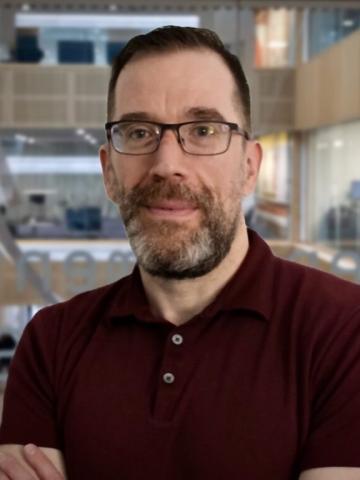
| Hank Hoffmann, UChicago Liew Family ChairHenry Hoffmann is the Liew Family Chair of the Department of Computer Science at the University of Chicago. He received the Presidential Early Career Award for Scientists and Engineers (PECASE) in 2019. He was granted early tenure in 2018. He is a member of the Samsung Security Hall of Fame and of the (unofficial) ASPLOS Hall of Fame. He has a Test of Time Honorable Mention from FSE 2021 for his work on Loop Perforation and approximate computing and a Most influential Paper from SEAMS 2025 for his work on applying control theory to software systems. He received the DOE Early Career Award in 2015. At Chicago he leads the Self-aware computing group (or SEEC project) and conducts research on adaptive techniques for power, energy, accuracy, security, and performance management in computing systems. Along with his PhD advisor and fellow students he spent several years at Tilera Corporation, a startup which commercialized the Raw architecture and created one of the first manycores and was sold for $130M in 2014. |
Example Selection and Post-Training Quantization for Large-Scale Machine Learning | |
| This talk will cover a pair of recent results unified by the method of approximation with simple linear error feedback. First, we will look at training example ordering for stochastic gradient descent, which has long been known to affect convergence rate. We will develop a theoretical characterization of what it is about the example order that affects convergence, and use this to motivate GraB (gradient balancing), an efficient linear-error-feedback-based example selection algorithm that yields a theoretically optimal convergence rate that's faster than the classic random-reshuffling scheme. Second, we will look at post-training quantization (PTQ), an especially important task in the practice of Large Language Model (LLM) inference, where a trained model is compressed without any additional fine-tuning. A theoretical characterization of the accuracy of "adaptive" linear-feedback quantization schemes will motivate QuIP (quantization with incoherence processing), a line of work on quantization that enables highly compressed (2-bit!) LLMs and comes with theoretical error guarantees. The talk will conclude with some thoughts about future work along these lines in machine learning systems. | |
|
Image
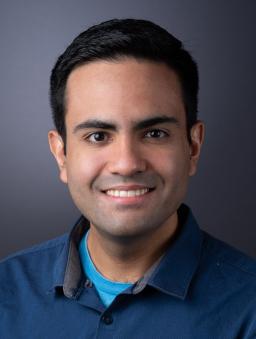
| Christopher De Sa, Cornell Associate ProfessorChris De Sa is an Associate Professor in the Computer Science department at Cornell University, a member of the Cornell Machine Learning Group, and leads the Relax ML Lab. His research interests include algorithmic, software, and hardware techniques for high-performance machine learning, with a focus on relaxed-consistency variants of stochastic algorithms such as asynchronous and low-precision stochastic gradient descent (SGD) and Markov chain Monte Carlo. His work builds towards using these techniques to construct data analytics and machine learning frameworks, including for deep learning, that are efficient, parallel, and distributed. |
Learning-Directed Operating Systems: Vision and Progress | |
The LDOS project aims to build an intelligent, self-adaptive Operating System (OS) that can optimally support modern applications’ performance and resource needs in diverse scenarios that are highly dynamic and exhibit significant complexity. In this talk, Michael Swift will describe the vision, goals, and progress of the LDOS project. | |
|
Image
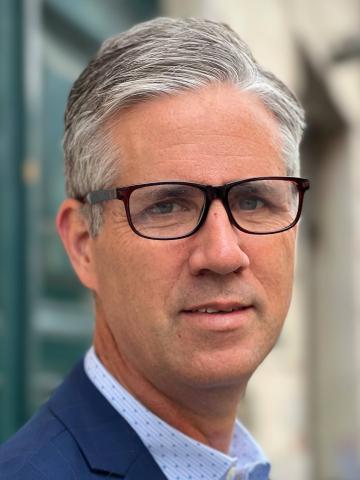
| Michael Swift, UW-Madison ProfessorMichael Swift is a professor at the University of Wisconsin-Madison. His research focuses on the hardware/operating system boundary, including virtual memory, persistence and storage, new compute technologies, and device drivers. He received his BA from Cornell University in 1992 and Ph.D. from the University of Washington in 2005. Before graduate school, he worked at Microsoft in the Windows group, where he implemented authentication and access control functionality in Windows Cairo, Windows NT, and Windows 2000. |
GPU Accelerated Lakehouse | |
| Abstract Forthcoming. | |
|
Image
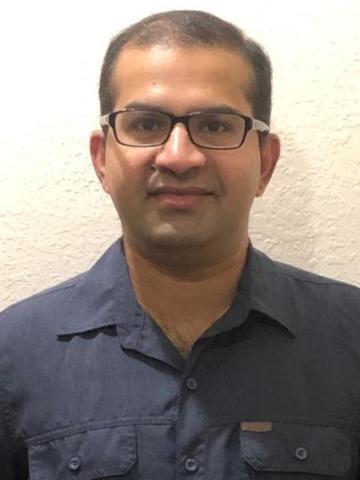
| Swami Sundararaman, IBM ArchitectSwaminathan (Swami) Sundararaman is an Architect at IBM. Previously, he led the storage-for-AI initiative at IBM Research. He was also the CTO/Co-founder of Pyxeda AI, working on new AI/ML cloud tools for improving AI literacy. Swami's area of expertise is Storage systems, Distributed Systems and AI and he is particularly interested in infrastructure for GPU-Accelerated Lakehouse. He has published many scientific papers and patents, and has served on the steering/program committee of leading storage and systems conferences. |
Kermit: Accelerating ML Policy Development | |
|
Image
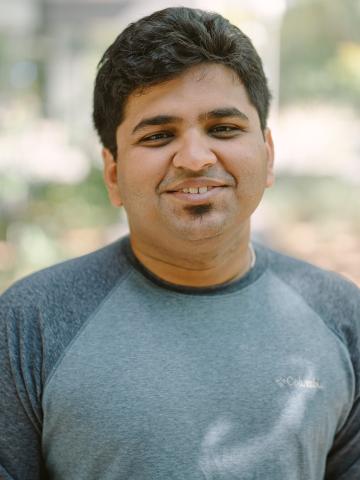
| Saurabh Agarwal, UT-Austin Research FellowSaurabh Agarwal is currently a part of the Learning Directed Operating System Expedition at UT-Austin. He graduated from UW-Madison, where he was Advised by Dimitris Papailiopoulos and Shivaram Venkataraman. His research interests are primarily in Systems for Machine Learning, especially around distributed training and inference of ML workloads. During his PhD, he has interned with Bilge Acun at FAIR, Amar Phanishayee at Microsoft Research and Yucheng Low at Apple. |
Self-defining systems. | |
|
Image
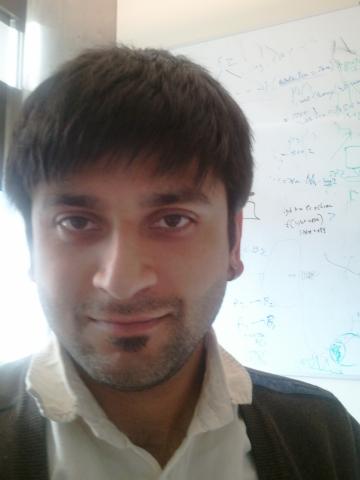
| Ratul Mahajan, UW ProfessorRatul Mahajan is a Professor at the University of Washington (Paul G. Allen School of Computer Science). He is also the co-director of UW FOCI (Future of Cloud Infrastructure) and an Amazon Scholar. Prior to that, he was a Co-founder and CEO of Intentionet, a company that pioneered intent-based networking and network verification, and a Principal Researcher at Microsoft Research. He got his PhD at the University of Washington and B.Tech at Indian Institute of Technology, Delhi, both in Computer Science and Engineering. Ratul is a computer systems researcher with a networking focus and has worked on a broad set of topics, including network verification, connected homes, network programming, optical networks, Internet routing and measurements, and mobile systems. He has published over fifty papers in top venues such as SIGCOMM, SOSP, MobiCom, CHI, and PLDI, and many of the technologies that he has helped develop are part of real-world systems at Microsoft and other companies. Ratul has been recognized as an ACM Distinguished Scientist, an ACM SIGCOMM Rising Star, and a Microsoft Research Graduate Fellow. His papers have won the ACM SIGCOMM Test-of-Time Award, the IEEE William R. Bennett Prize, the ACM SIGCOMM Best Paper Awards (twice), and the HVC Best Paper Award. |
Safe and Deployable Reinforcement Learning for Reason and Action | |
| AI agents that can learn decision-making grounded in their own experience will eventually surpass the abilities of agents that learn only from static datasets. Reinforcement learning (RL) is one of the primary mechanisms in AI for creating agents that learn from trial-and-error how to best achieve their goals. In this talk, I will give an overview of my lab’s research in reinforcement learning (RL) and scaling it toward real-world applications. The talk will have three parts. In the first, I will discuss challenges and solutions that arise when integrating RL into complete robotic systems based on my lab’s work using RL to compete in the robot soccer domain. In the second, I will discuss the challenge of building confidence in AI agents before their decisions have real-world consequences. Finally, I will discuss the use of RL to train LLMs how to “reason” and how this approach suggests an exciting new direction for creating agents that adapt computation in real-time. | |
|
Image
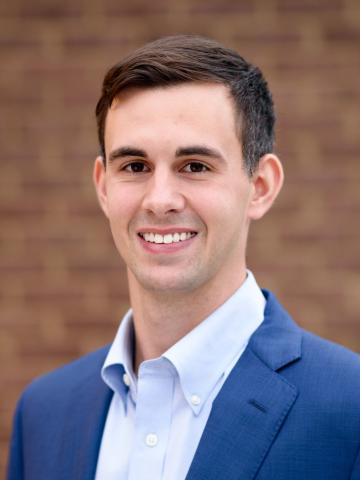
| Josiah Hanna, UW-Madison Assistant ProfessorJosiah Hanna is an assistant professor in the Computer Sciences Department at the University of Wisconsin-Madison. His research aims to develop fully autonomous agents that learn how to achieve goals from experience. Towards this goal, he studies a branch of machine learning called reinforcement learning (RL) that enables autonomous agents to learn via trial-and-error interaction. The goal of his research is to develop and apply reinforcement learning algorithms that are effective with a limited amount of task interaction time and to integrate these algorithms into complete autonomous agents. |
Infrastructure Automation: The journey from Software-Defined to Autonomic | |
|
Image
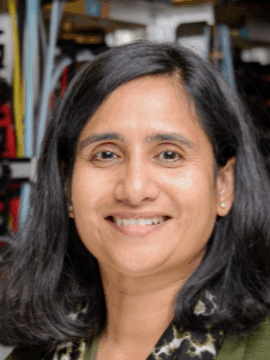
| Sujata Banerjee, Microsoft Partner Research Manager, Systems and NetworkingSujata Banerjee is the Partner Manager of the Systems and Networking Research Group in MSR- Redmond. Sujata’s expertise is in software-defined networking, network function virtualization, and network management. She served as the technical program co-chair of the APNet 2026 workshop, ACM SIGCOMM 2020, USENIX NSDI 2018, and ACM SOSR 2017 conferences. She serves on the board of USENIX and co-chairs the Computing Research Association’s (CRA) committee for widening participation (CRA-WP). She is on the scientific advisory committee of the FABRIC and SPHERE research infrastructure projects funded by the U.S. National Science Foundation (NSF). In 2020, she served in the AI working group of the U.S. FCC’s Technology Advisory Council. She co-chaired the steering committee of ACM SIGCOMM in 2025 and was the vice-chair of SIGCOMM from 2019 to 2021. She has over 40 US patents, is a recipient of the NSF CAREER award in networking research, and is a Fellow of the IEEE. She is also an inaugural Mark A. Stevens Distinguished Alumni Awardee for the School of Advanced Computing in the Viterbi School of Engineering at USC, and serves on the advisory board of the Stevens School of Advanced Computing and AI. Prior to MSR, Sujata was the Vice President of Research, leading the VMware Research Group (VRG) at Broadcom, which worked on a broad spectrum of core research topics in systems, machine learning, and algorithms, with a strong track record of academic research and VMware product impact. Her career journey includes Hewlett Packard Enterprise Labs, where she was a distinguished technologist and research director, leading a network systems research group that conducted research on enterprise, service provider, and datacenter networks. Before HP Labs, she enjoyed an academic career at the University of Pittsburgh as a tenured associate professor. Sujata received the Ph.D. degree from the University of Southern California (USC) and the Bachelor’s and Master’s degrees from the Indian Institute of Technology (IIT) Bombay, in Mumbai, India. |
Towards Trustworthy Learning-Driven Systems | |
| One vision of learning-driven systems is to use LLMs and agents to improve deployed code dynamically: generating, specializing, or rewriting components and policies online to improve performance. These systems do improve performance, but can introduce serious bugs. The problem is, we need to ensure the safety of this generated code that can never be seen by humans. Our solution is to use automatic verification techniques to improve our trust in learning-driven systems. In this talk, I'll discuss two ways we have done this in LDOS. First, Vulcan makes memory safety cheap to verify by restricting the LLM to a small domain specific language and a narrow read-only interface. Second, Guardrails uses runtime monitoring to detect, at runtime violations of properties we cannot verify ahead of time (e.g. performance), and provides verified recovery actions, that ensure the system will safely recover | |
|
Image
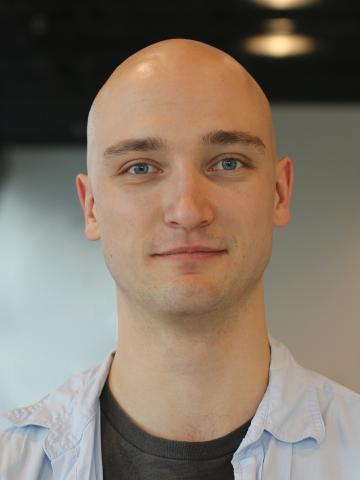
| Eric Hayden Campbell, UT-Austin Postdoctoral Research FellowEric Hayden's research focuses on program semantics, verification, and synthesis for open programs. He believes that hands-off formal methods tools can help us precisely reason about dynamically (re)-configurable code. During his PhD at Cornell University, he focused on a particular kind of open program, networking data plane programs: type-checking them, inferring their specs, and generating their configurations. These days, he is interested in a broader class of open programs, including databases, operating systems, and AI programming systems. |